
By Hammer & Anvil Energy | Industry Opinion
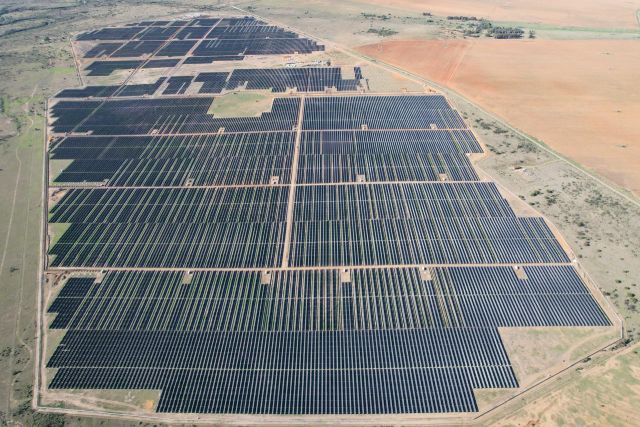
South Africa’s energy landscape is undergoing rapid transformation. As Independent Power Producers (IPPs) and mining companies seek to unlock strategic resources in parallel, it’s inevitable that land use conflicts will arise. The ongoing legal dispute between Renergen and Sola over the Springbok Solar Project has become a high-profile test case—one that may well shape how future rights, risks, and responsibilities are managed in dual-use energy development.
At Hammer & Anvil Energy, where we support developers through technical, legal, and compliance complexity, we see this moment not just as a legal battle—but as a valuable learning opportunity.
A Timeline of the Springbok Dispute
- 2020: SOLA secures rights to the Springbok Solar Project—a 150MW development in the Free State—through acquisition from a respected, well-known project originator.
- 2021–2023: The project progresses through early-stage feasibility, environmental approvals, and land-use planning. It receives conditional support from the local municipality and a confirmed grid connection.
- January 2024: Renergen lodges a formal objection, stating that the solar project overlaps with its shale gas and helium exploration rights and could prejudice long-term mineral development.
- April 2025: The Minister of Mineral Resources and Energy revokes SOLA’s Environmental Authorisation (EA) based on Section 53 of the Mineral and Petroleum Resources Development Act (MPRDA).
- April–May 2025: Legal filings and public statements from both sides intensify. Sola seeks urgent review in the High Court as construction continues. Renergen issues a public notice stating its legal rights have been vindicated and approaches the courts to halt construction.
Understanding Section 53 of the MPRDA
Section 53 of the MPRDA is central to this case. It stipulates that no person may use land in a way that may inhibit mining unless they obtain prior written ministerial consent. It applies even when mining operations have not yet commenced.
Originally intended to prevent the loss of mining opportunities through incompatible land use (such as agriculture or residential zoning), Section 53 is increasingly being tested in the age of renewables.
Key challenges include:
- Vague thresholds for what constitutes “use that may inhibit mining”
- Unclear interdepartmental coordination between DMRE, DFFE, and provincial authorities
- Uncertainty for developers seeking to invest in green infrastructure
This case may set precedent around sequencing of rights—raising vital questions for project developers:
- Does a renewable project need to secure consent even where no mining activity is underway?
- What constitutes due diligence around overlapping mineral rights?
- Can co-location be achieved through technical design and mutual agreement?
Legal and Compliance Observations
From a compliance standpoint, the Springbok case shows how multi-layered regulatory frameworks in South Africa require an integrated, proactive approach. At Hammer & Anvil Energy, we regularly advise clients on issues such as:
- Spatial and rights mapping: Early use of GIS overlays and cadastral analysis to identify overlaps with mining or other rights holders
- Regulatory sequencing: Navigating which approvals must be secured first—and from which entity—to avoid retroactive invalidations
- Stakeholder engagement: Engaging not only government departments, but also surrounding communities and mineral right holders to find co-beneficial outcomes
- Legal risk management: Working with seasoned legal counsel to structure MOUs, land agreements, and obtain Section 53 clearance when required
For developers, this case is a reminder that failure to undertake full-spectrum compliance audits—even when inheriting projects from reputable developers—can expose even mature projects to existential risk.
A Matter of National Importance
It’s easy to frame this as a battle between fossil fuel interests and clean energy. But that would be a disservice to the stakes involved.
- Renergen position is that helium is a strategic national asset with global economic significance. They argue that obstruction of their mineral rights could harm national industrial development.
- SOLA’s response is that the Springbok Solar Project offers tangible, immediate benefits: clean energy, energy security, and local employment.
Both are valid. South Africa needs both mineral development and clean electricity. These are not competing interests—they are both in the public interest. What’s required is regulatory clarity, constructive engagement, and mechanisms for coexistence or sequencing.
Lessons for Developers: Don’t Go It Alone
This situation is not unique. In fact, Hammer & Anvil Energy and its partners have worked on projects where mineral, water, land use, and energy rights intersect.
In our recent post, The Renewable Energy Dream Team: 6 Advisors Your Project Can’t Succeed Without, we outlined why every project should have a number of experts in the project team. The Springbok case proves the point. Even established developers with legitimate claims can find themselves blindsided by regulatory pushback if the team doesn’t anticipate every angle.
Our Call to the Sector
We urge all developers, landowners, financiers and project sponsors to treat compliance and legal strategy as core—not peripheral—functions.
Do you have a project in a sensitive zone? Unsure whether Section 53 or other mineral rights issues apply? Do not wait for a headline. Engage early.
Email our compliance team today at energy@hammerandanvil.co.za for a confidential advisory session.
We stand for outcomes that support energy security, mineral resource development, and long-term investor confidence.
Hammer & Anvil Energy
Your Engineering, Compliance, and Strategy Partner in Africa’s Energy Transition.